The short answer
Take body measurements every 1 to 4 weeks. Weekly works best for most goals: it's frequent enough to build a habit and catch real change early, but spaced enough that each new number reflects actual progress rather than what you ate yesterday. Pick one day — Sunday morning is popular — and make it your measurement day, every week.
Why not measure every day?
Because your body's daily fluctuations are bigger than one day of real change. Water retention, salt, glycogen, food still in your digestive system, a hard workout the day before — each of these can move your waist by half an inch or more in 24 hours. Genuine fat loss moves it by maybe a tenth of that per day.
So daily measurements mostly show noise. And noise is a motivation killer: you did everything right, the tape says you got bigger, and suddenly tracking feels pointless. Measuring less often is not lazier — it's statistically smarter.
Why not less than once a month?
At the other extreme, measuring rarely breaks your feedback loop. If something isn't working — calories crept up, training slipped — you want to know within a couple of weeks, not after two months of flat numbers. Sparse data also makes trends hard to read: with only three points since spring, one odd measurement can distort the whole picture. Monthly is the practical floor; beyond that, you're flying blind between check-ins.
The right cadence for your goal
- Fat loss: weekly. Waist and hip changes show up within 2–3 weeks of consistent effort, so weekly points draw a readable trend fast and let you adjust early.
- Muscle gain: every 2–4 weeks. Muscle grows much more slowly than fat is lost — arms and thighs might add a quarter inch in a month. Measuring biceps weekly just documents your water balance; give gains time to become measurable.
- Maintenance: monthly. When the goal is staying where you are, a monthly check is a low-effort alarm system that catches drift before your clothes do.
Consistency beats frequency
Whatever cadence you choose, the comparisons only mean something if the conditions are identical every time:
- Same day of the week — weekends and weekdays have different eating and training patterns.
- Same time of day — ideally morning, before breakfast, after using the bathroom.
- Same state — bare skin, relaxed posture, normal exhale, tape at the same landmark.
A slightly "wrong" technique applied identically every week still produces a perfectly usable trend. A perfect technique applied inconsistently produces garbage. If you're not sure your spots and tape placement are repeatable, review how to take body measurements first.
Let the app remember for you ⏰
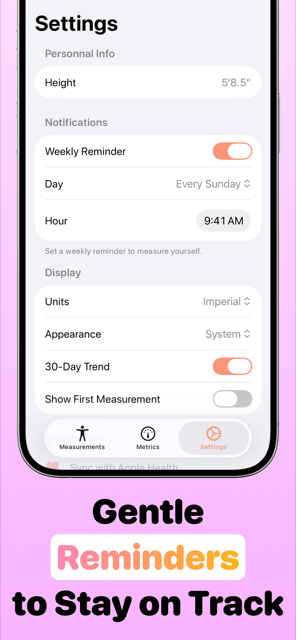
The hardest part of weekly measuring isn't the tape — it's remembering, week after week. In the Body Measurement Tracker app, set a weekly reminder for the exact day and hour you choose, log everything in one quick entry, and watch your 30-day and all-time trends build themselves. Free on iPhone and Android, with your data staying on your phone.


What about weighing yourself?
Scale weight is noisier than tape measurements, so if you enjoy daily weigh-ins, only pay attention to the weekly average — never a single reading. And if the scale is flat while your measurements shrink, that's not a problem at all: read losing inches but not weight to see why it's actually the best news you can get.