What you need
One tool: a soft, flexible tape measure — the kind tailors use. A rigid construction tape can't follow the curve of your body, and string-plus-ruler methods add error at every step. Soft tapes cost a few dollars, and a mirror (to check the tape is level) is the only other thing that helps.
The 5 rules that make measurements comparable
Whether you're taking body measurements for weight loss or muscle gain, and whether you're female or male, the technique is identical. What matters is repeatability:
- Bare skin. Clothing adds up to an inch of noise. Measure directly on the skin or over one identical thin layer every time.
- Tape level with the floor. A tape that dips at the back reads short. Check front and back in a mirror.
- Snug, not tight. The tape should sit flat against the skin without denting it. Compressing soft tissue can shave off half an inch you'll "gain back" next week.
- Same time of day. Morning, before eating, after using the bathroom is the gold standard. Food, water and workouts can swing readings by an inch or more.
- Same landmark, every time. Moving the tape an inch up or down your torso can change the reading by two inches. The landmarks below fix the spot once and for all.
Where to measure each body part
Waist
The narrowest point of your torso, usually just above the belly button. Stand relaxed and read the tape at the end of a normal exhale — don't suck in. Full details in our guide on how to measure your waist.
Hips
The widest point of your glutes, not your hip bones. Feet together, tape level all the way around. See how to measure your hips for the step-by-step and the waist-to-hip ratio.
Chest
Around the fullest part of the chest, across the nipple line, arms relaxed at your sides. Read the tape at the end of a normal exhale — a big breath in can add two inches.
Biceps
Around the largest point of the upper arm, arm relaxed and hanging at your side. Track left and right separately — details in how to measure your biceps.
Thighs
Around the largest point of the thigh, just below the glute fold. Stand with your weight even on both feet, muscle relaxed. Measure both legs.
Calves
Around the largest point of the calf, standing with weight evenly distributed and the muscle relaxed.
Forearms
Around the largest point of the forearm, below the elbow, arm relaxed with the hand open — a clenched fist inflates the reading.
Neck
Around the neck at its narrowest point, just below the Adam's apple, looking straight ahead with shoulders relaxed.
What to track: weight loss vs muscle gain
You don't need all eight sites every week. Match the tape to the goal:
- Weight loss: waist and hips are the priority — that's where fat loss shows first for most people. Add thighs and chest for the full picture. These measurements often move for weeks while the scale stalls.
- Muscle gain: biceps, chest, thighs and calves (left and right where applicable), plus waist to confirm you're adding muscle rather than mostly fat.
- Body recomposition: track both sets — a shrinking waist alongside growing arms is progress no scale can show you.
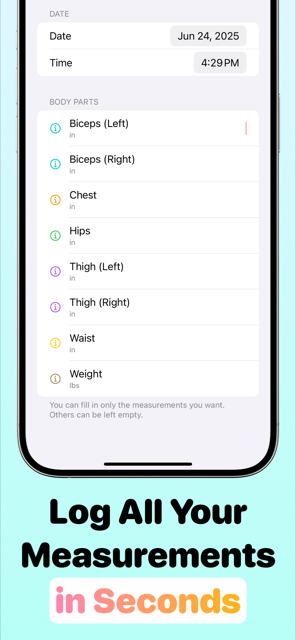
Log every body part in seconds 📋
Eight landmarks are a lot to remember — so the Body Measurement Tracker app builds them in. Every body part comes with step-by-step how-to-measure instructions, the log form takes all your measurements in one go (with biceps and thighs tracked left and right separately), and each site gets its own 30-day trend and chart. A weekly reminder keeps measurement day from slipping.


How often should you measure?
Once a week, same day, same conditions, is the sweet spot for almost everyone. Daily measurements magnify water-weight noise; monthly ones leave you flying blind for too long. We break down the reasoning in how often to take body measurements.